recording something live through the headphone jack on iphone what app to use
How to Record Professional Sound on an iPhone or iPad with an External Microphone
[Disclaimer: Mediashi is a participant in the Amazon Services LLC Associates Program, an affiliate advertizing plan designed to provide a ways for sites to earn ad fees by linking to Amazon.com. As an Amazon Acquaintance, we earn from qualifying purchases.]
Whether recording a podcast, narration for video or upping your game for alive video streaming projects similar news interviews over Skype, many media professionals will come to a point where they want to learn how to record professional audio on an iPhone or iPad with an external microphone. Both iPhone and Android smartphones are incredible, tiny computers that take already eclipsed speeds of laptop computers from merely a few years back. As a multimedia tool, though, the iPhone comes with inherent limitations. Those include limited connectivity through a single Lightning port, minimal voltage necessary to power some microphones and a reliance on consumer apps non intended for professional audio production. These limitations must be overcome in gild to utilise the iPhone in coordination with professional audio equipment. That's where most media creators run into challenges or begin to accept sub-par results.
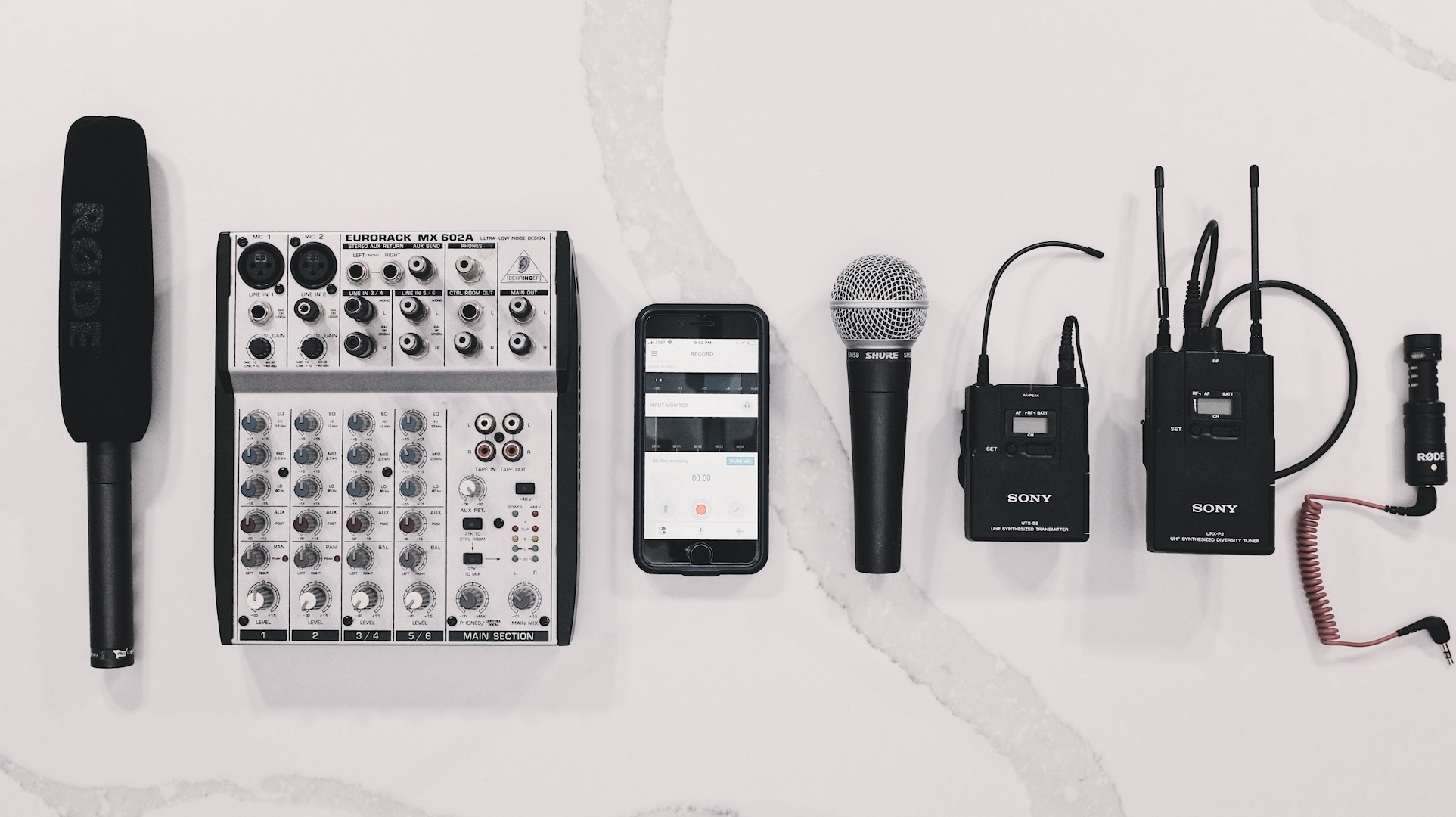
Nosotros'll examine several techniques to tape professional audio on an iphone using external microphones. Specifically, we'll look at methods that crave minimal additional equipment to connect your existing audio recording gear to the iPhone. These are the microphones nosotros'll be using:
-
Shure SM-58 XLR Cardioid Microphone
-
Rode VideoMicro
-
Sony Wireless Lavalier Microphone
-
Rode NTG-two XLR Condenser Shotgun Microphone
None of these microphones were made specifically to connect to an iPhone. We'll touch on some of those proprietary options below as well, only it's worth noting that sound gear has not changed as quickly as video over the years. That means investing in a good, manufacture standard microphone ways yous can continue to use information technology for years and with other equipment beyond the iPhone itself. It too means you won't be stuck with a useless microphone if Apple does away with its Lightning port on a future generation of phones.
Beginning, Sound RECORDING WITH THE IPHONE Past ITSELF
I should point out that by itself, the iPhone notwithstanding proves to be a capable audio recording device. The built-in microphone on the iPhone is omnidirectional, meaning it is designed to pretty much pick up all the sound effectually the phone. That can be great if you lot're in a run and gun news setting where you don't have the luxury of precise microphone placement and a lot of standard newsroom microphones are omnidirectional already. The downside is that it means the iPhone picks up a lot of room noise and other background racket as well. Nevertheless, under ideal conditions and using the correct audio recording app, it can practice wonders for elementary audio-but projects. It's another story when you're trying to apply that microphone for video projects with subjects more than than two feet from the iPhone. In those situations, the sound recorded by the iPhone automatically makes your projection seem amateurish.
Since at least the iPhone 4, some radio reporters take used the iPhone equally their primary field recorder. It allows them to record decent quality sound consequent with a lot of news coverage and even edit clips or electronic mail complete reports with multitrack sound dorsum to the newsroom. And they practice all this while keeping a low profile that allows them to bound quickly into the fray after a city council meeting to get that key soundbite before anyone else is even gear up.
A NOTE ON IPHONE Audio RECORDING APPS
Whether using the built-in iPhone microphone or connecting an external microphone to your iPhone, the microphone itself is only ane part of the equation. You also need to pair it with a good audio recording app. While audio technology hasn't changed dramatically in recent decades, the functionality of audio recording apps for iPhone varies greatly. Here are a few things to consider when picking your app:
-
Recording Format: Make sure the app records in a standard format that can be easily shared and edited past other software. WAV is the standard, loftier quality format, but sound files tend to be larger. MP3 is a compressed file that delivers good audio quality, especially for spoken discussion, with modest file sizes.
-
Audio Monitoring: Non all apps allow y'all to listen to what you're recording through headphones equally you record. A lot of people skip this step, but it means you lot sometimes notice unwanted noise afterwards and have to re-record. When possible, brand certain to monitor the alive recording with headphones.
-
Export Formats: When sound file sizes start to get large, you lot need convenient options to go the audio off of your iPhone. This is where a lot of apps vary. Most offer email and SMS export options, only the best audio recording apps too offer options like Send to FTP Server, WiFi Downloads or uploads to cloud storage straight from your iPhone.
For the below examples on how to record professional audio on an iPhone with an external microphone, we'll exist using the ShurePlus MOTIV audio recording app. It's designed to work with Shure's proprietary iPhone microphones, merely works fine without them as well. The reason that we'll use it here is that in addition to checking the above boxes, it also automatically displays what microphone information technology is using equally the audio source when recording. That will let you to confirm that the iPhone correctly recognizes your external microphone instead of just reverting back to the born microphone without you knowing.
IPHONE EXTERNAL MICROPHONE ADAPTERS: LIGHTNING VS. TRS TO TRRS ADAPTERS
One of the initial challenges to overcome is that smartphones, including the iPhone, rely on iii.5mm TRRS audio connections instead of the standard TRS connexion. Standard TRS (tip-ring-sleeve) plugs communicate two channels of sound, primarily left aqueduct and right channel. This is the standard for most headphones outputting stereo sound or consumer microphones inputting stereo audio. TRRS (tip-ring-ring-sleeve) adds a third channel to connect a mono microphone signal as well. If y'all plug a TRS headphone plug into a TRRS phone plug, you'll be able to hear fine and the telephone will simply use its own built in microphone. Yet, if you plug a TRS microphone plug into a TRRS smartphone plug, aught happens. That's because information technology won't make the necessary connection for the microphone sleeve. So, we demand an adapter.
Note that about cardioid microphones like the Shure SM-58 and Rode VideoMicro that nosotros'll exist using for tests do non require external power from a device or adapter. Condenser microphones, however, oft require 48v of power, usually referred to as phantom power, and only a handful of adapters provide that much ability. Luckily, some condenser microphones can provide their ain power with a battery.
For these demonstrations, nosotros'll exist using two TRRS adapters. The offset is the Rode SC4 3.5mm TRS microphone to TRRS adapter (some other option is the Movo MC3 3.5mm TRS microphone to TRRS adapter). The 2d is an XLR to TRRS adapter which does not transmit whatever power from the device to the microphone, so whatsoever microphone we connect will crave its ain power source. The XLR to TRRS does let the states to connect professional condenser microphones to the iPhone and the adapter also provides a dedicated headphone plug for monitoring sound, something frequently overlooked in the adapter marketplace. If your iPhone lacks a dedicated headphone connection, you'll also need Apple's Lightning to headphone adapter.
CONNECT AN XLR CARDIOID MICROPHONE TO AN IPHONE
Cardioid microphones are perchance the about common microphones yous would want to connect to an iPhone and they are workhorses for many people working in sound. They practice non crave 48V of phantom power. For this example, we're going to connect a Shure SM-58 XLR cardioid microphone to an iPhone with a fairly simple set of adapters. Nosotros'll also connect the tiny RodeVideoMicro to an iPhone, although instead of an XLR connection, it uses a standard consumer TRS connection.
CONNECTING THE SHURE SM-58 MICROPHONE TO AN IPHONE
The Shure SM-58 is a durable microphone commonly used for phase performances and music recordings because of it'south incredible audio quality and directional recording pattern. Yous need to be fairly close to and right in front end of the microphone, but it'southward directional recording pattern ways room noise and other distractions are often excluded from the recording. That's great if you don't have a dedicated studio space with sound treatment, but nevertheless want a loftier quality audio recording. The Shure SM-58 is also a great microphone for podcast recording in the abode. Popular USB and condenser microphones marketed to first podcasters are slap-up for semi-studio environments, but in nigh cases they pick up way too much room noise and audio reflections. The Shure SM-58 solves those problems. At that place's too a lower cost version called the Shure SM-48.
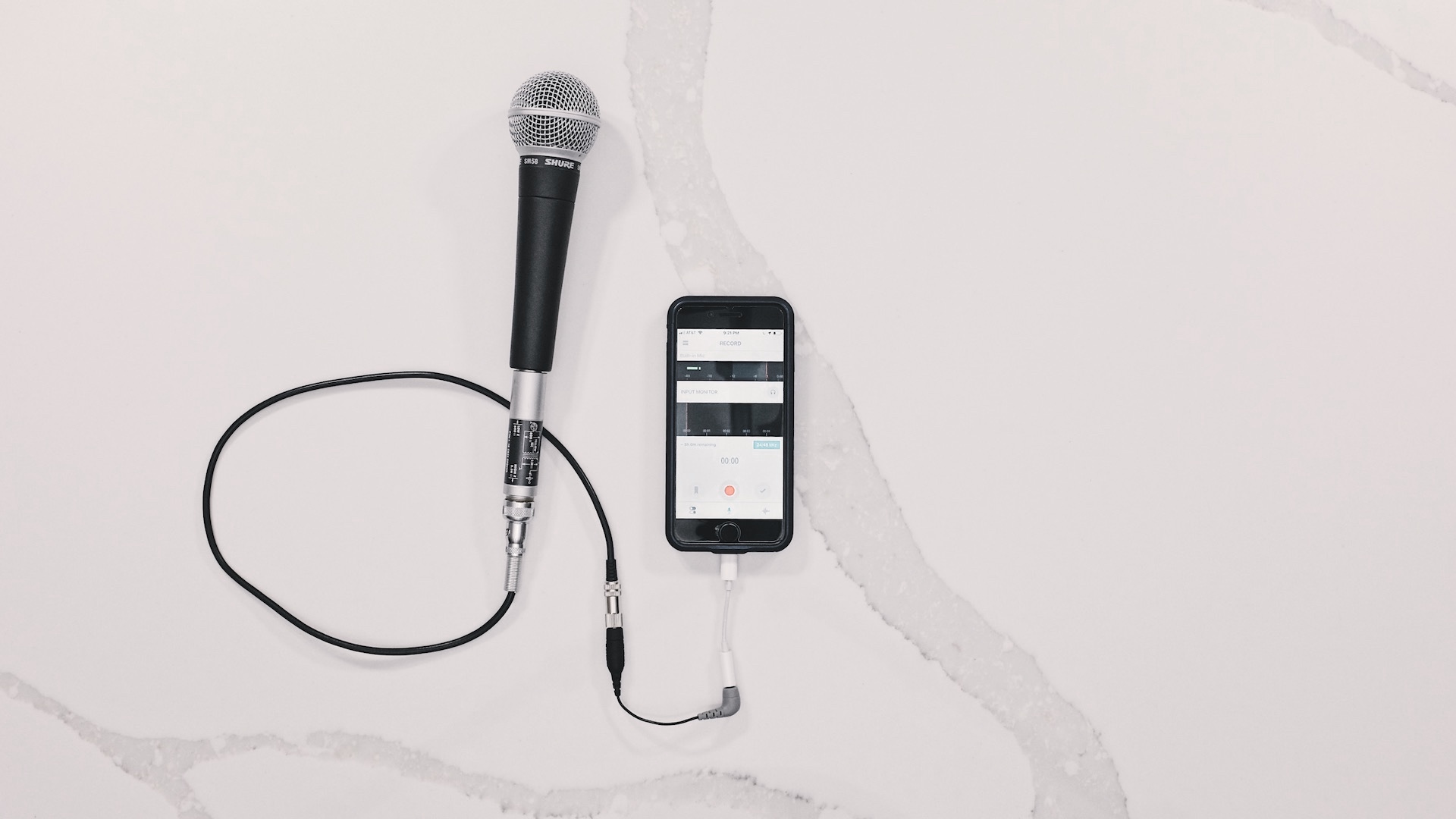
Connecting a Shure SM-58 cardioid microphone to an iPhone.
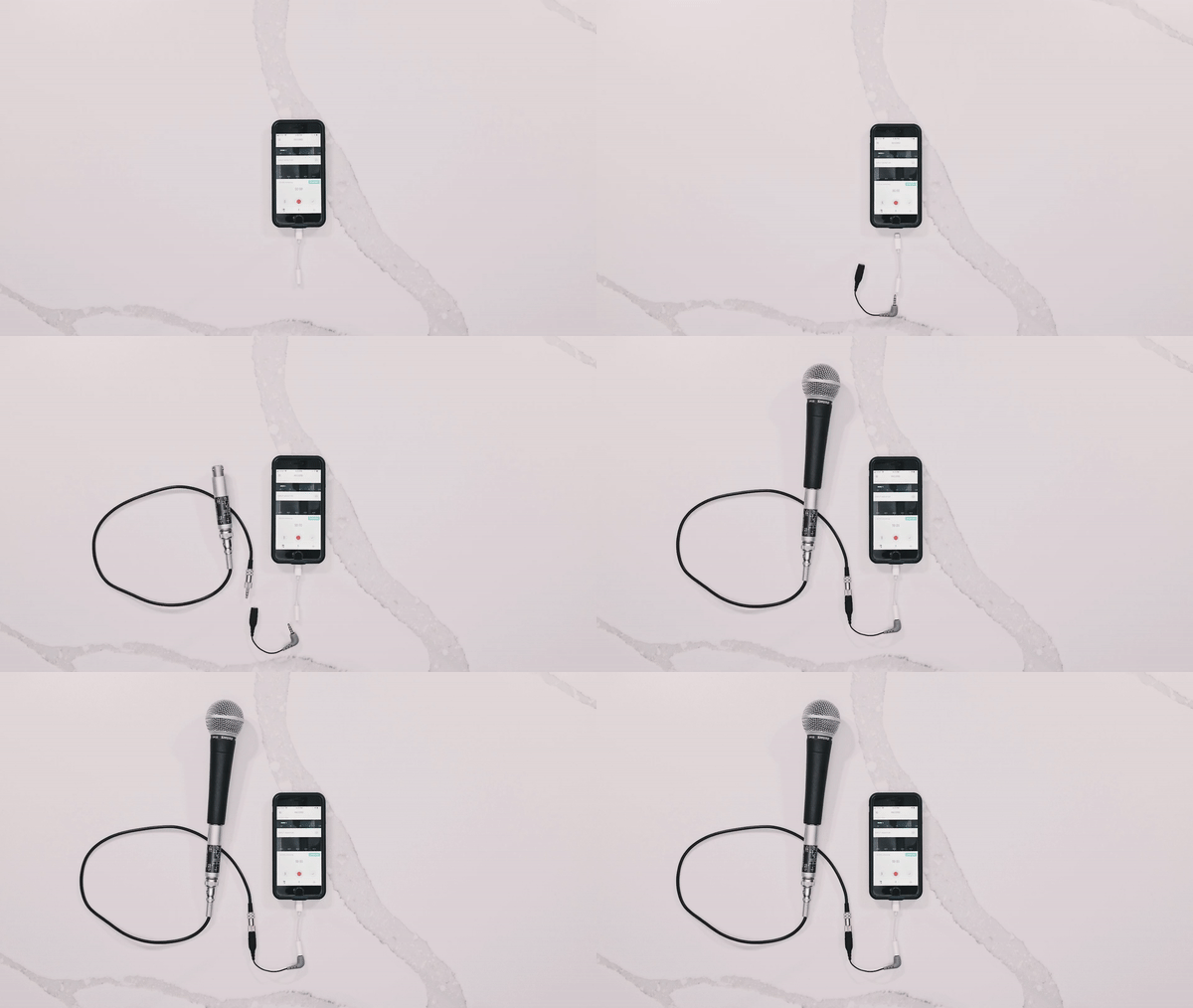
To connect the Shure SM-58 cardioid microphone to an iPhone, nosotros'll employ this serial of adapters: Shure XLR to 3.5mm TRS adapter > Rode SC4 3.5mm TRS microphone to TRRS adapter > the standard Lightning headphone adapter that comes with the iPhone. If recording on an iPad, yous can skip this last stride and plug the Rode SC4 TRRS adapter straight into the headphone jack.
NOTE ON AUDIO EXAMPLES : All audio recording examples in this guide have had audio levels normalized using Audacity and so volume levels will be equal beyond the recordings. No other changes have been made.
As you tin can hear in the audio sample, the sound quality is quite clean with minimal to no background hum or room noise. Like all the sound samples here, this was recorded in a normal domicile setting and not a studio. The audio recording level using this setup was low, though. If your iPhone sound recording app offers the pick to enhance the Gain for a stronger level, effort to avoid it because that introduces more hiss and noise into the recording. It'southward more important to get a clean, loftier quality recording and and so y'all tin raise the level in post if needed like we did here. All together, this is a very simple, reliable setup to connect an external XLR cardioid microphone to an iPhone for much higher quality recordings. In addition to the depression audio recording level, one other drawback is that the Rode SC4 TRS to TRRS adapter does not offer a headphone port to monitor audio, although some other adapters do.
CONNECTING THE RODE VIDEOMICRO MICROPHONE TO AN IPHONE
The Rode VideoMicro has become a pop, low cost microphone choice for recording improve audio for video on DSLR cameras and camcorders. Information technology'south also a nice option for the iPhone. The Rode comes with a hot shoe or tripod mount that reduces vibration and noise and even comes with its ain furry microphone cover to reduce wind racket. Similar the Shure SM-58, it's also very directional which means you lot need to ensure your audio source is directly in front of the microphone. Any audio to the sides or behind the microphone volition be minimized.
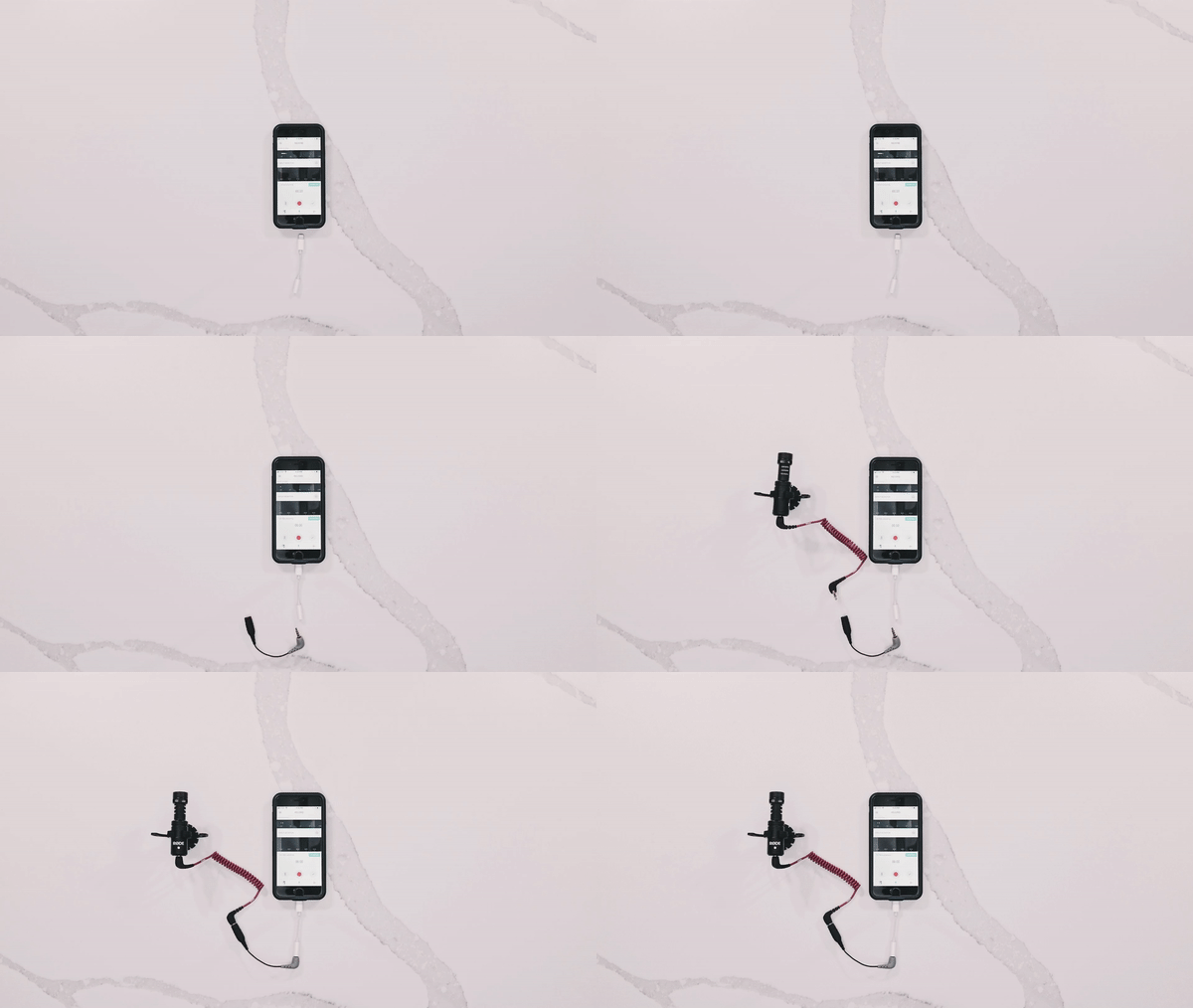
Connecting the Rode VideoMicro to an iPhone is even easier considering nosotros practice not require an XLR to iii.5mm TRS adapter. For this instance, nosotros'll plug the Rode VideoMicro directly into the Rode SC4 three.5mm TRS microphone to TRRS adapter and and then plug that into the iPhone using the Lightning headphone adapter.
Like the Shure SM-58, the directional cardioid pattern here produces a pretty clean recording. The audio levels were still lower than desired, only without much background noise. That ways that instead of raising the Gain in the recording app, we were easily able to Normalize the audio in Audacity subsequently without introducing more than racket. As well like to the Shure SM-58, the Rode VideoMicro needs to be close to your subject for a quality recording. Most online examples bear witness the microphone mounted onto or adjacent to the iPhone or photographic camera v or 6 feet away. At that distance, the Rode VideoMicro will not deliver skilful results. If you demand to be that far away from your subject for video, consider mounting the microphone on a smash pole or similar mount 12 or so inches above the bailiwick and merely out of the video frame and using a normal stereo extension cablevision to connect the microphone into the Rode SC4 adapter. If you're just recording audio without video, that shouldn't be a problem.
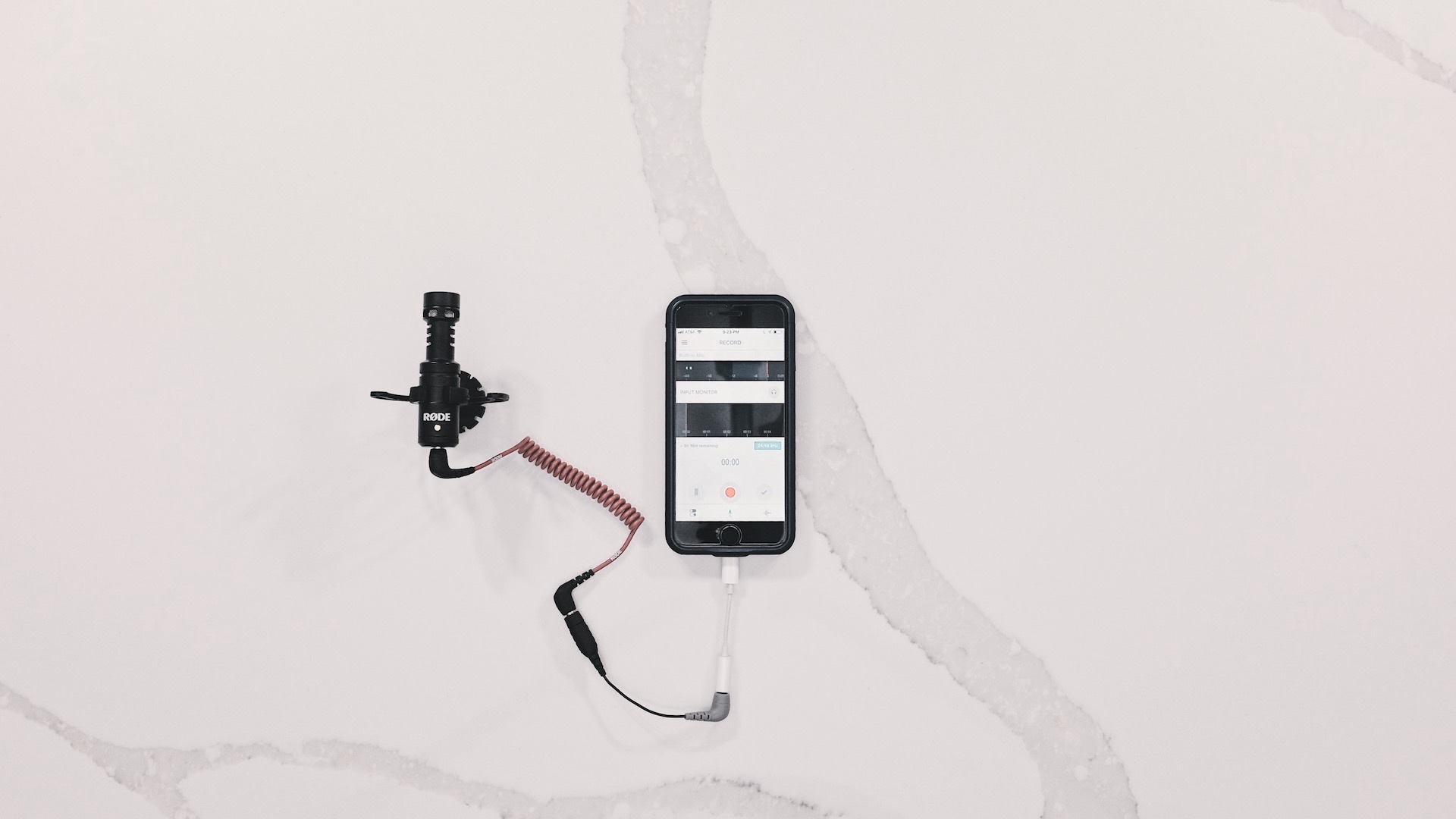
Connecting a Rode VideoMicro cardioid microphone to an iPhone.
Notation that Rode also makes two other versions of the Rode VideoMicro specifically for the iPhone chosen the Rode VideoMic Me with a native TRRS adapter to plug directly into the iPhone and the Rode VideoMic Me-L with a native Lightning connector. If you lot will only be recording and producing audio on your IOS device and don't desire the flexibility to utilize other equipment, those could exist options worth because as well.
CONNECT A WIRELESS LAVALIER MICROPHONE TO AN IPHONE
When recording video on an iPhone, it can be particularly challenging to record good audio. The iPhone'south omnidirectional microphone just records way also much room noise. In those situations, it may be best to use a wireless microphone for iPhone video recording, particularly if your subject needs to move around. At that place are a lot of wireless lavalier microphone systems on the market, just notation that sound quality and flexibility correlate closely to price. All of these systems consist of a transmitter connected to a lavalier microphone and a receiver that you connect to your recording device, in this instance the iPhone.
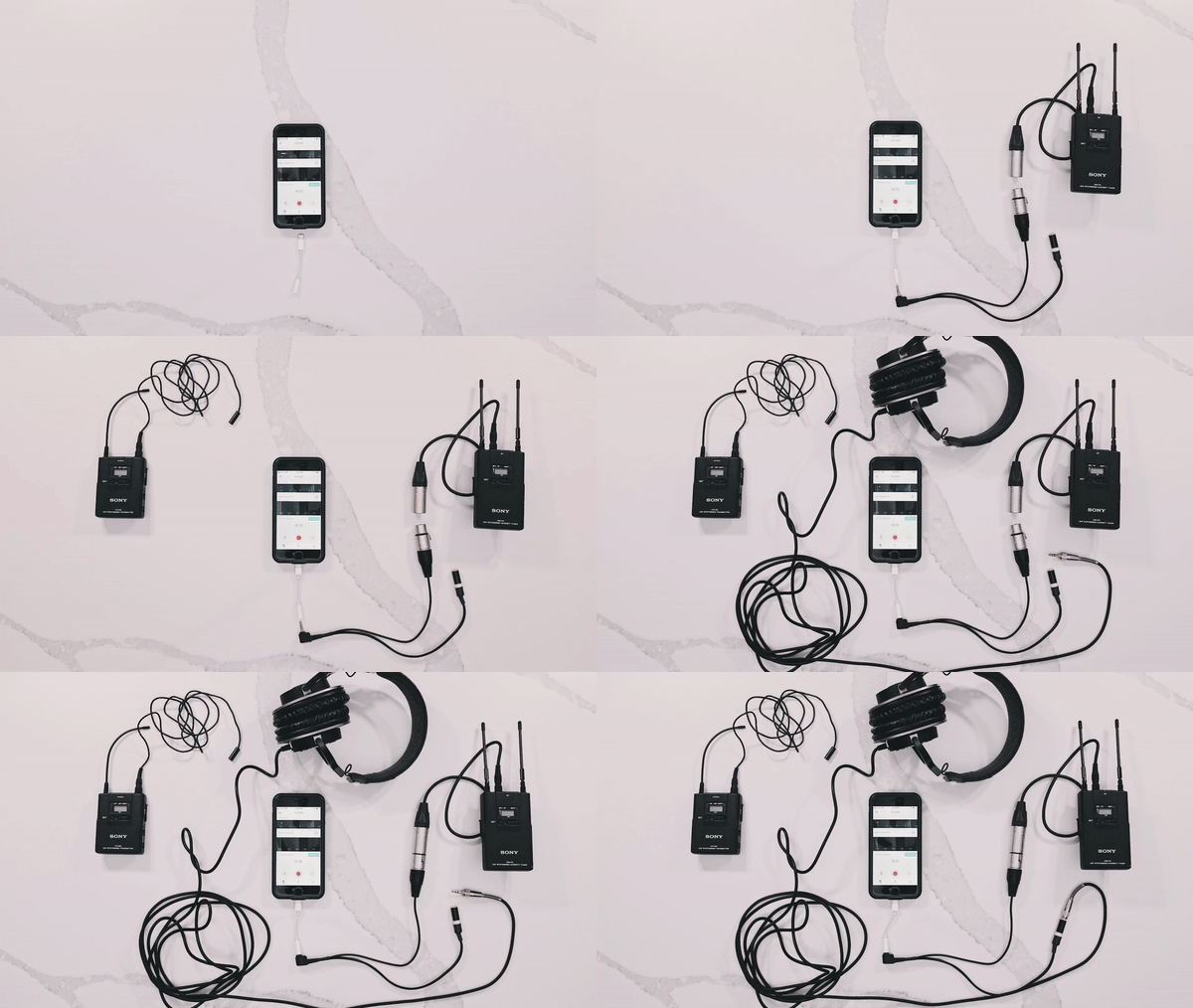
In this case, we're going to connect a Sony wireless lavalier microphone to an iPhone. Our setup of adapters looks like this: Sony wireless receiver with XLR output > XLR to TRRS adapter > Lightning headphone adapter. Annotation that the XLR to TRRS adapter also provides a headphone out port to monitor our audio.
As you can hear, the lavalier microphone'south more omnidirectional pattern picks upward a little more room racket, merely also provides much more than improved audio quality over the iPhone's built in microphone. That's especially true when you consider that with the wireless lavalier system, the transmitter tin exist v or even l feet away from the receiver without any change in audio. Because the lavalier system uses a powered condenser microphone and provides its own power, the recording level on the iPhone was too much higher without needing to enhance levels much in post production. Many wireless lavalier systems also provide the option of adjusting the output level from the receiver, allowing you to accommodate your audio levels there instead of relying on the iPhone'south proceeds adjustment, which only introduces more noise.
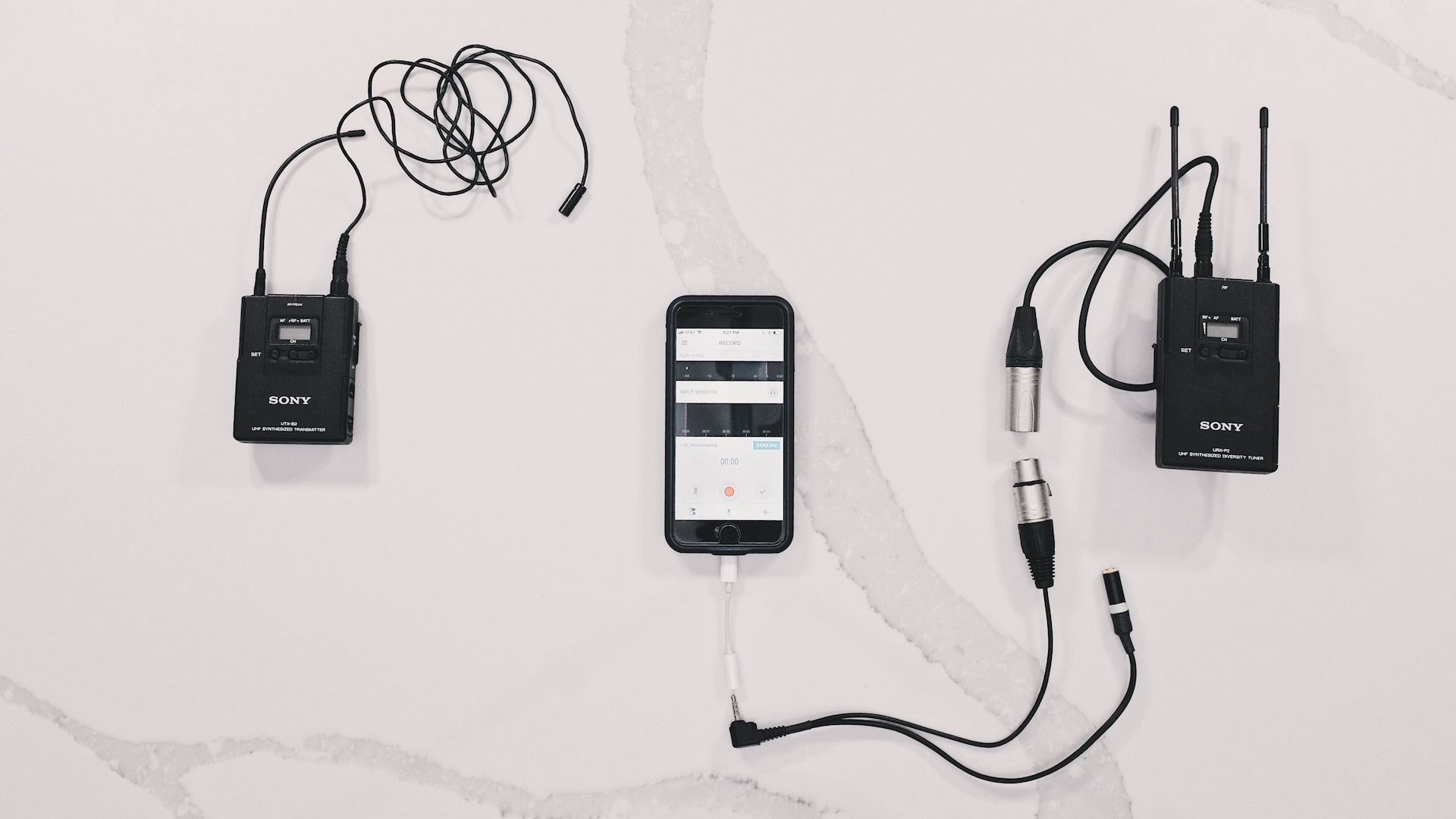
Connecting a wireless lavalier microphone to an iPhone.
Two additional quick notes on connecting a wireless lavalier microphone to an iPhone. Get-go, it'due south always of import to monitor your audio because depending on the frequency the system is using to transmit sound, you lot could encounter interference from other devices using that same bandwidth. More than expensive systems by and large offer a greater diverseness of signals so you tin can easily switch to another frequency without interference. Also, just considering the wireless lavalier system is designed to use with a lavalier microphone, yous tin oftentimes connect other microphones as well.
IPHONE VIDEO RECORDING APPS THAT USE AN EXTERNAL MICROPHONE
If you are using a wireless lavalier microphone for your audio recording, there's a good chance you're working on a video project. The iPhone's native camera app will allow you to utilise an external microphone, simply it won't tell you whether it is using the external microphone signal or reverting to your internal microphone. There are several other iPhone video recording apps that use an external microphone and also confirm for yous that they're doing then.
For these audio tests, we're using the ShurePlus Motiv app, but Shure also has an iPhone video recording app called the ShurePlus Motiv Video. Like the sound app, it will confirm whether it is recording using the external microphone and also show the sound levels you're recording. For even higher quality video recording and more than semi-professional person video tools, another popular option is the FiLMiC Pro app which also offers more control of the audio elements of your video recording.
CONNECT AN XLR CONDENSER OR ANY Professional MICROPHONE TO AN IPHONE THROUGH AN Audio MIXER
The side by side setup will allow you to connect an XLR condenser microphone, or actually any XLR professional microphone, to an iPhone using an audio mixer or soundboard. This setup certainly involves more setup and exercise, as well as introduces more than potential points of failure or sources of noise into you recording. Information technology likewise offers the greatest flexibility and degree of control over your recording and audio quality.
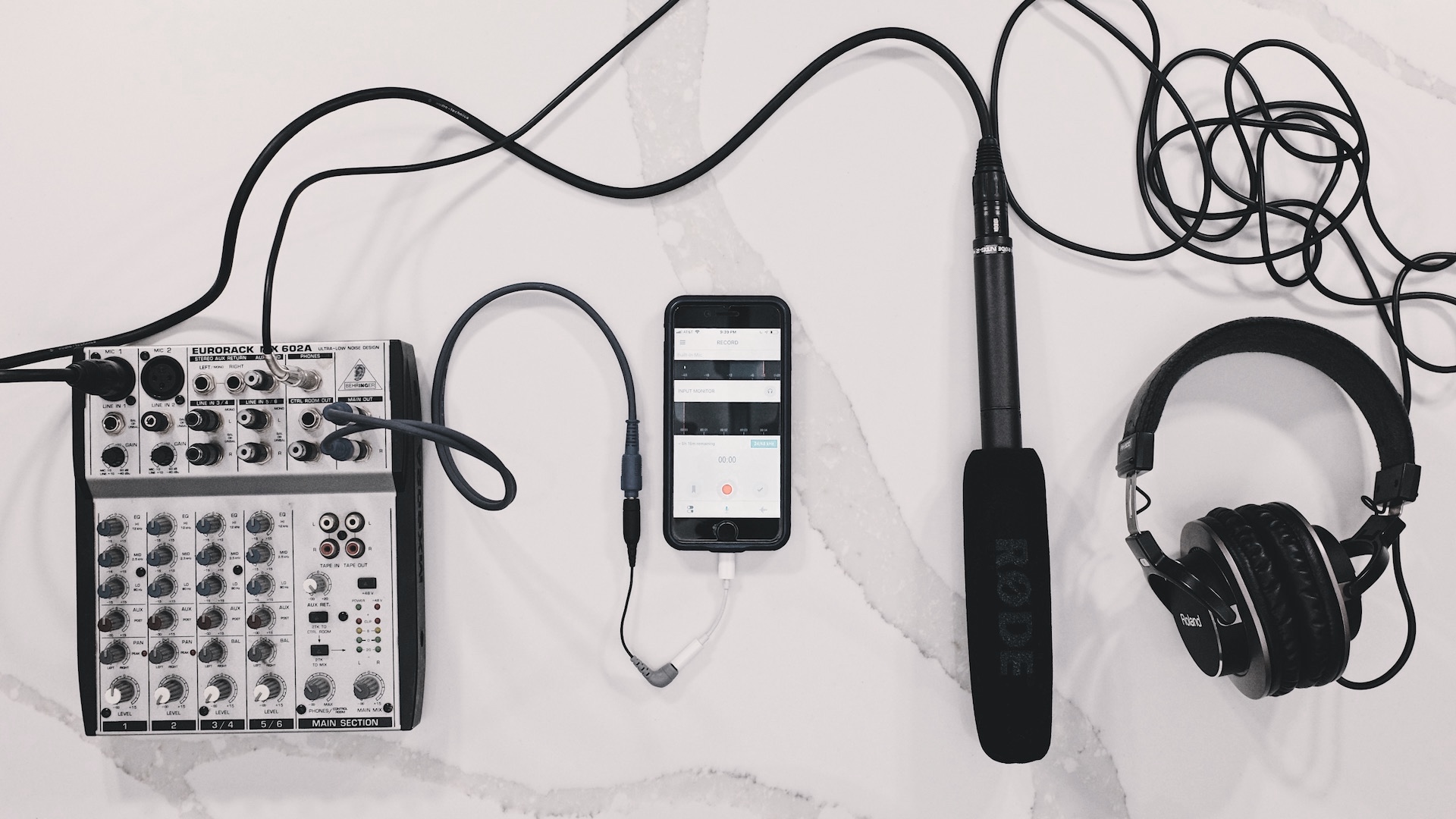
Connecting a Rode NTG-two condenser shotgun microphone to an iPhone using an audio mixer.
Using a dedicated audio mixer or soundboard to tape audio on your iPhone not but allows you lot to utilise any microphone or audio source you have, but it also allows you to use multiple sources. Each pot, or audio channel, has independent controls that let you lot to adjust the audio level for that microphone in addition to fine tuning things like the low, mid and high audio frequency for each source. For example, hearing a low level refrigerator hum? You tin minimize that with your low frequency adjustment. And an audio mixer or soundboard besides has the option of providing the 48v of phantom power you demand for a condenser microphone. In this case, we'll be using the Rode NTG-ii XLR Condenser Shotgun Microphone.
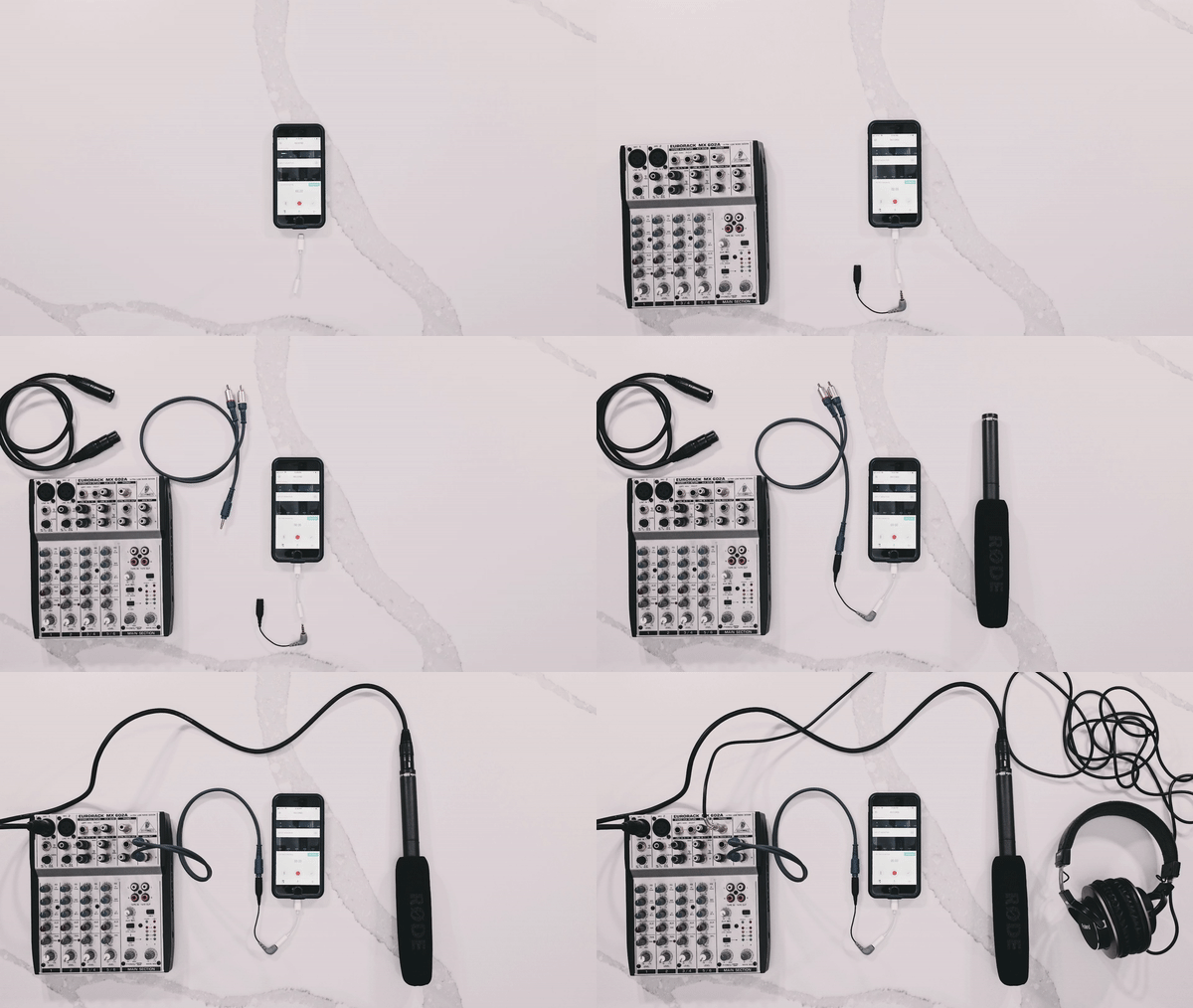
Our setup from microphone to iPhone looks similar this: Rode NTG-ii shotgun microphone > XLR to XLR microphone cable > Behringer audio mixer with Phantom Power turned on > RCA to 3.5mm TRS adapter connected to the main audio output of the audio mixer > Rode SC4 TRS to TRRS adapter > Apple tree Lightning headphone adapter > iPhone. Make sure all of the connections are secure because a loose connection at any point will innovate dissonance into your recording.
Likewise beware that when using this setup, you have three different points where you command audio levels: the audio mixer input for the microphone, the master audio output of the audio mixer and the iPhone recording level. If the sound level or gain is turned too high for any individual control, you lot will introduce background hum and dissonance into your recording. That means yous need to experiment, starting with each level turned to the 25% mark and then adjust things incrementally from at that place to ensure you accomplish optimal recording quality. And while the Rode SC4 TRS to TRRS adapter does not include a headphone out jack to monitor your recorded audio, the audio mixer will. That allows you lot to do a lot of the work balancing sound levels on the board earlier you even need to worry about the iPhone. That likewise helps you lot connect whatsoever microphone through the audio mixer. Here's a test using the Shure SM-58 cardioid microphone with the sound mixer and we're able to become a much stronger signal, reducing the need to normalize or boost audio levels in mail product.
Recording audio on the iPhone using an sound mixer or soundboard is the closest you'll get to a traditional pro recording setup. A unproblematic audio mixer can be a flexible, rather cost effective tool as well, but they do require a little more feel, or at to the lowest degree willingness to experiment and learn to ensure you go the best possible audio quality. This audio recording setup certainly isn't difficult, though, and learning how to use it properly will translate to any future sound or multimedia recording project y'all work on, whether or not it involves an iPhone.
HOW TO RECORD MULTIPLE Audio SOURCES ON AN IPHONE
By introducing an audio mixer or soundboard into your production setup, you besides introduce a lot of new opportunities, like recording multiple audio sources on your iPhone and mixing them to a single file. This is what audio mixers were designed for. Have 3 microphones and three people y'all want to tape for your podcast? No problem. Just plug each microphone into a unlike pot on the audio mixer and set levels independently. Want to include someone else who tin't be in the room? You can add them as well past calling them on the phone, Skype, Facetime or another audio conversation app and plugging another iPhone into the audio mixer. Simply make sure yous're wearing headphones and then you can hear them and set anybody'south audio level correctly.
ALTERNATIVE METHODS TO Tape PROFESSIONAL AUDIO ON AN IPHONE
We've discussed several easy ways to connect an external microphone to an iPhone to record professional person audio, but there are a lot of other options out in that location as well. A wide range of adapters exist, from the simple to the more complex, and they all offer different opportunities and challenges.
MICROPHONES WITH Built IN LIGHTNING ADAPTERS FOR IPHONE
Several companies now make external microphones with congenital in Lightning adapters for connecting to an iPhone or iPad. Audio quality varies and you lot get what y'all pay for, but depending on your needs, some of these microphones tin offer an easy solution for your apply case. Rode makes a version of the Rode VideoMicro used hither that uses Apple tree's Lightning connector called the Rode VideoMic Me-50. Samson's even come up out with a wireless microphone system that connects over a Lightning port and Shure has a whole line of microphones and microphone adapters designed specifically to piece of work with the iPhone. These microphones certainly go far easy to become started, but none of them offering professional person audio quality. Some other claiming is that relying on the Lightning port prevents you from using them with other equipment subsequently on or possibly even with new Apple products if the company replaces the Lightning port downwardly the route, which has happened before.
MICROPHONE ADAPTERS WITH LIGHTNING OR TRRS OUTPUT FOR IPHONE
Some other solution is a dedicated microphone adapter that connects directly to a Lightning port or a TRRS plug. IK Multimedia makes several of these for iPhones and other smartphones similar their iRig Pre which too provides the 48v of phantom power needed to power a studio condenser microphone. There's too the similar Saramonic SmartRig Di, which offers the same XLR to Lightning connectedness with the choice to provide phantom power. Shure provides several higher finish microphone adapters that connect over the iPhone'south Lightning connection every bit well. There are several options on the market, but be sure to read reviews and listen to sound samples before ownership ane. They will not all work perfectly with all microphones, but they do offer a simple, off the shelf solution to basic recording.
HOW TO Use Apple'S USB ADAPTER TO CONNECT A MICROPHONE TO AN IPHONE
A peculiarly appealing selection is using Apple's Lightning to USB Photographic camera Adapter to connect a microphone to an iPhone. Despite the name, it works with a lot more than than cameras. If you lot're using a USB microphone with a computer, you volition be able to connect it to your iPhone using this adapter. Annotation, yet, that for several college end condenser microphones like the Blue Yeti, you'll need to add a powered USB hub into the mix because the iPhone cannot laissez passer along the 48v of phantom power you'll need.
The other great thing about this setup is that you can pair the Apple adapter with some other simple USB audio adapter to connect any TRS microphone plug to the iPhone and still have a headphone out port for monitoring audio. That makes it a lot easier to connect a wide range of microphones to your iPhone, although you nonetheless don't get the ability to adjust levels. You could, though, nevertheless employ the audio mixer setup described in a higher place and connect it to your iPhone using i of these adapters instead.
CONCLUSION: REMEMBER THAT SIMPLICITY IS KEY TO Audio Production
Even later on eight or 9 generations of iPhones, the well-nigh reliable and high quality audio recorder remains a dedicated field recorder like the Tascam DR-100. To borrow Apple tree'due south old tagline, it just works. App based recording with software will always be inherently buggy and prone to failure. Apple's flimsy Lightning port volition also never exist as solid or reliable as a professional XLR audio connection. That said, there are many scenarios out there where trying to route professional microphone audio to an iPhone actually solves a lot of other challenges.
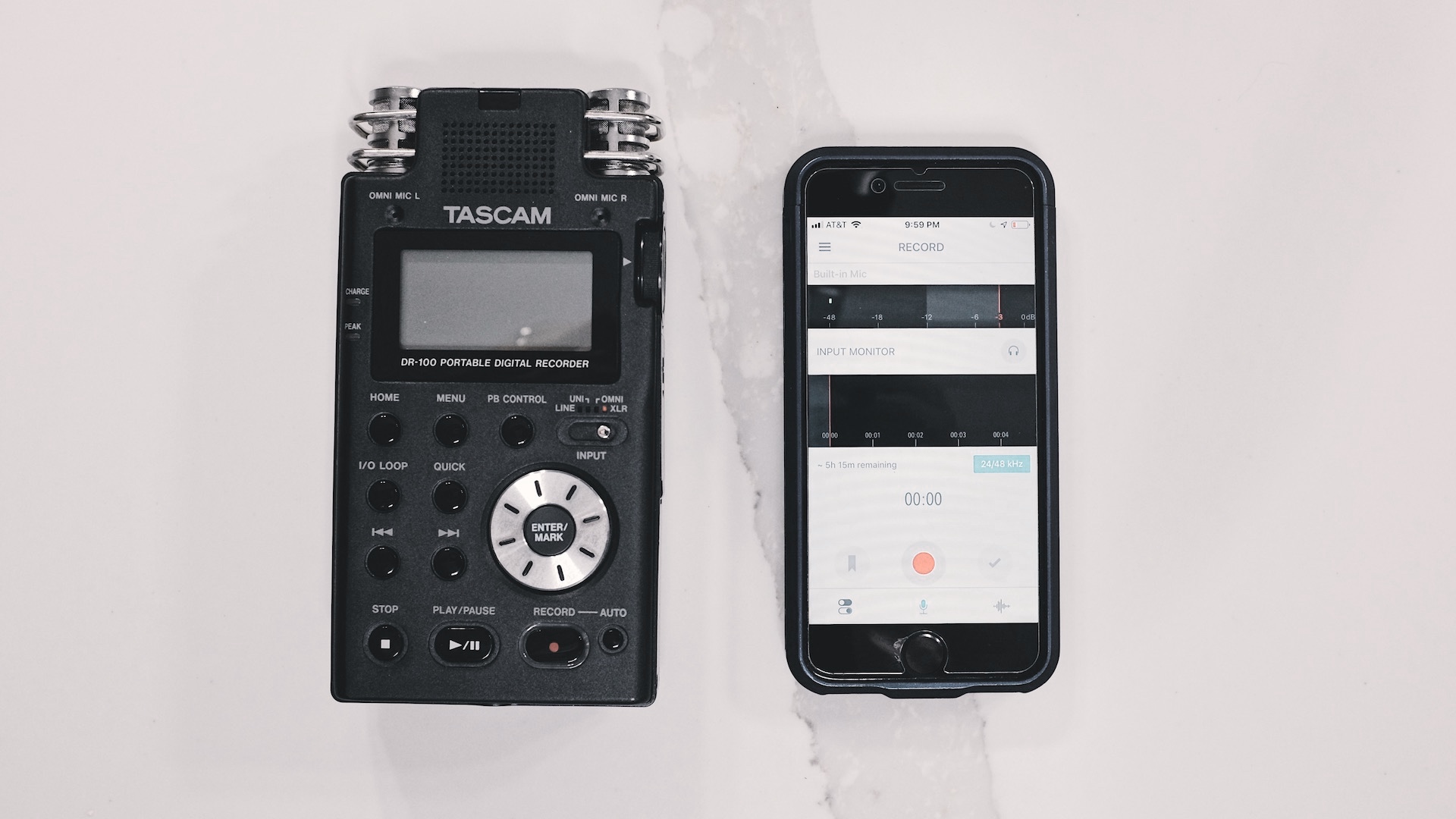
A dedicated audio field recorder compared to the iPhone.
For real professional recording, the key is to proceed it elementary. That ways reducing potential points of failure in your setup and opportunities to introduce unwanted racket into your recording. That said, if y'all need an extra recorder, are operating with minimal equipment (and upkeep) or only want to proceed your multimedia production kit calorie-free and flexible (recollect lightweight travel studio), the iPhone offers a plethora of recording opportunities that could respond the prayers of even the most item of multimedia journalists, YouTubers and podcast producers. You just need to understand what those opportunities are and how to go the most out of your iPhone as an audio and multimedia recording device.
Source: https://www.mediashi.com/articles/how-to-record-professional-audio-on-an-iphone-or-ipad-with-an-external-microphone
0 Response to "recording something live through the headphone jack on iphone what app to use"
Post a Comment